We are all well acquainted with stress. Stress is a normal part of everyday life.
In fact, the right amount of stress can motivate our young people to achieve their goals, get things done and to try new things. It can also help them to stay alert, focused and energised. However, prolonged and high levels of stress can be overwhelming and affect the functioning of their minds and bodies.
The teenage years can be challenging. It is a period of life where a lot of changes are happening. Bodies are rapidly changing and growing, emotions are running high, and individual identities are forming. Our young people are also facing various challenges, including academic pressures, the pervasive pressures imposed by social media and the fear of rejection. These factors can significantly impact their mental well-being.
Prolonged and high amounts of stress can be a serious health concern for young people and may increase their risk of developing mental health challenges like anxiety and depression.
What is stress?
Stress is the response that occurs when the pressure of a challenging situation exceeds our ability to cope.
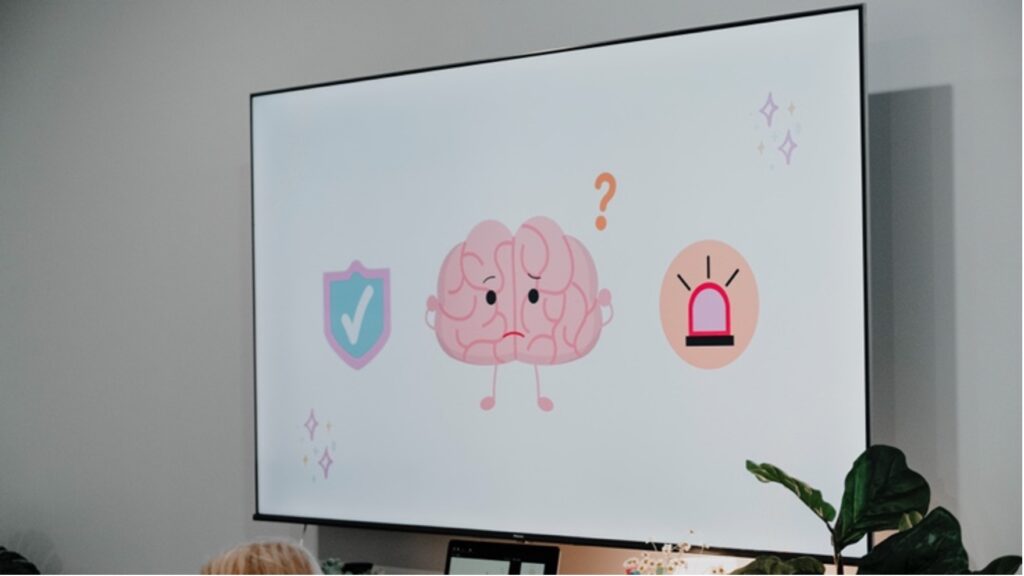
Our brains are designed to keep us safe. They have a built-in alarm system that kicks into gear when they sense a potential threat or danger. When this happens, our brains release a burst of chemicals that rush through our bodies, preparing us to either face the danger (fight) or get away from it as fast as we can (flight). For example, imagine you are on a hike and you suddenly hear a loud rustling sound behind you. Your brain instantly rings the alarm, releasing those chemicals into your bloodstream. Your heart starts to beat faster, your eyes widen, and your muscles tense up. All these reactions happen to help you stay safe in a dangerous situation.
But here’s the tricky part. Sometimes our brains get confused and have trouble distinguishing real threats from perceived ones (e.g., something that seems scary). So, even when there’s no actual danger, our brains can still send us into stress mode. It’s like a false alarm going off inside us.
Therefore, it is important for us to learn coping strategies and to retrain our brains not to set off the alarm system when we are not really in danger. It’s all about taking control and not letting our brains boss us around. The MiiND’s Guide to Coping with Stress is designed to do just that.
What are some common signs of stress to look out for in my young person?
Signs of stress can manifest in a number of ways and can vary from person-to-person. Below are some common indicators:
Physical signs of stress may look like:
- Difficulty breathing.
- Frequent and unexplained headaches.
- Stomach aches or digestive issues.
- Feeling dizzy.
- Fatigue or low energy levels.
- Sleeping difficulties such as trouble falling asleep or staying asleep.
- Changes in appetite (eating more or less than usual).
- Muscle aches and pains.
- Blurred eyesight.
- Frequent illnesses such as colds or infections.
- Changes in menstrual cycles.
Emotional signs of stress may look like:
- Nervousness or anxiousness.
- Increased irritability or becoming easily frustrated.
- Moodiness or sudden shifts in emotions.
- Feelings of sadness and tearfulness.
- Difficulties managing emotions, leading to outbursts.
- Frequent mood swings.
- Increased aggression.
- Inability to enjoy activities they used to find pleasurable.
Behavioural signs of stress may look like:
- Withdrawal from social activities.
- Avoidance of previously enjoyed activities.
- Difficulty making decisions.
- Impaired concentration or inability to focus on tasks.
- Decreased motivation.
- Restlessness, fidgeting or displaying signs of being on edge.
- Engaging in repetitive behaviours like skin picking or nail biting.
- Snapping at people.
If you notice these signs persisting or significantly impacting your young person’s well-being, it may be beneficial to seek professional support from a healthcare professional. You can find a professional near you by visiting our community page.
Reviewed by Laura Scherman (BPsychSc(Hons), MPsych(Clin), MAPS), Dinusha Cragg (BSocSc(Psych)(Hons), MPsych(Clin), MAPS) and Ross Carlyon (BA, DipEd, MEd Studies, DipSchoolAdmin).
References
- Australian Psychological Society (APS). (2015). Stress and Wellbeing: How Australians are coping with life. APS. https://psychology.org.au/getmedia/ae32e645-a4f0-4f7c-b3ce-dfd83237c281/stress-wellbeing-survey.pdf.
- Anniko, M. M., Boersma, K., & Tillfors, M. (2019). Sources of Stress and worry in the development of stress-related mental health problems: A longitudinal investigation from early- to mid-adolescence. Anxiety, Stress and Coping, 32(2), 155-167. https://doi.org/10.1080/10615806.2018.1549657.
- Aldwin, C. (2012). Stress and coping across the lifespan. In S. Folkman (Ed.), The Oxford Handbook of Stress, Health, and Coping (pp. 15-34). Oxford University Press.
- De Anda, D. et al. (2000). Stress, stressors and coping among high school students. Children and Youth Services Review, 22(6), 441-463.
- Lin, H. J., & Yusoff, M. S. B. (2013). Psychological distress, sources of stress and coping strategy in high school students. International Medical Journal, 20(6), 1-6.
- Nagabharana, T. K., Joseph, S., Rizwana, A., Krishna, M., Barker, M., Fall, C., Kumaran, K., & Krishnaveni, G. V. (2021). What stresses adolescents? A qualitative study on perceptions of stress, stressors and coping mechanisms among urban adolescents in India. Welcome Open Res, 11(6), 1-19.
- Noushad, S., Ahmed, S., Ansari, B., Mustafa, U. H., Saleem, Y., & Hazrat, H. (2021). Physiological biomarkers of chronic stress: A systematic review. International Journal of Health Sciences, 15(5), 46-59.
- Romeo, R. D. (2014). The teenage brain: The stress response and the adolescent brain. Current Directions in Psychological Science, 22(2), 140-145. https://doi.org/10.1177%2F0963721413475445.
- Schussler, D. L., Oh, Y., Mahfouz, J., Levitan, J., Frank, J. L., Broderick, P. C., Mitra, J. L., Kohler, K., & Greenberg, M. T. (2020). Stress and Well-Being: A Systematic Case Study of Adolescents’ Experiences in a Mindfulness-Based Program. Journal of Child and Family Studies, 30, 431-446. https://doi-org.ezproxy.usc.edu.au/10.1007/s10826-020-01864-5.
- Straub, R. O. (2017). Health Psychology: A Biopsychosocal Approach (5th ed.). Worth Publishers.