
For many young people, their ideas around how they look at feel are modelled to them in their home environment. The people they’re with, the shows they watch, the movies they see and the toys they play with all shape the way they think and feel about their own body. As a parent or carer, you have a wonderful opportunity to intervene when there are messages that aren’t supportive of fostering body appreciation. You can provide an alternative way of thinking and teach them to accept themselves just as they are.
We acknowledge that so many of us have grown up being taught that we’re not good enough. There are messages constantly being flung at us that tell us what we need to ‘fix’, ‘alter’, ‘clean up’, ‘clear up’, ‘tighten’ and ‘tone’. It is exhausting for us, let alone our young people. If you are someone that has struggled with (or continues to struggle with) their body image, please know you’re not alone. Carmen and I have been there, and we know just how all-consuming it can be. We created the Body Appreciation Workbook to be a practical resource for teens to use to support them with their body image. That said, we know the workbook isn’t enough. We need your support in the home to help them as they move towards body appreciation.
Here are some things you can do:
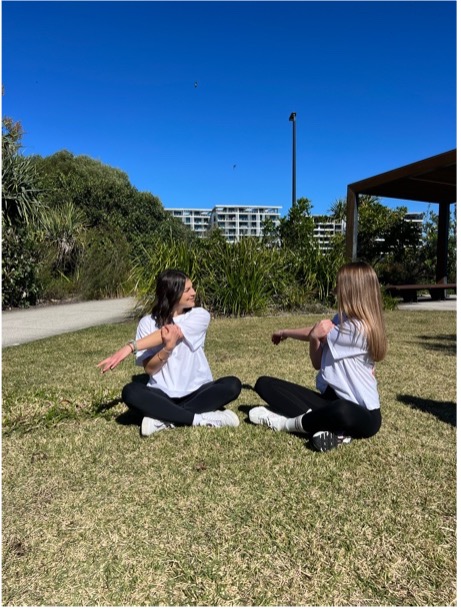
Suggest activities that support them in appreciating what their body can do!
We know from the research that the activities that foster the greatest feeling of body appreciation are those that incorporate both the mind and body. This isn’t limited to physical activity; it also includes creative activities. Here are a few ideas to get you feeling inspired – colouring, swimming, stretching, playing footy, Pilates, walking, reading, and cooking.

Create a brave space to talk about their changing body
Teens don’t wake up one morning fully developed. The changes that occur throughout puberty are gradual and they may feel awkward or self-conscious about the seemingly strange changes that are taking place. Uncertainty and change are difficult things to navigate for young people (and adults too), so creating a brave space where they can share how they’re feeling can be so valuable. I would recommend initiating the conversation from a place of curiosity. For example, you might say, “I notice that you were looking quite closely at your body in the mirror, was there something in particularly you were looking at.” Listen to what they say and empathise. It all starts with conversation and from there you may explore different avenues to provide them with extra support if they would like it or need it.
Practice self-compassion in front of your young person – link this to body image flexibility
The research tells us that when we practice self-compassion, we are able to have greater levels of ‘body image flexibility’. Body image flexibility is the ability to look at a person and think they are beautiful without it having a negative impact on the way you view yourself. In practice this might look like, “wow those jeans look incredible on Sarah. I don’t know if they’re my style, but I’d love to find myself a pair that make me feel really good.” If we struggle with body image flexibility, we may use that experience of seeing Sarah looking great as a way to put ourselves, and our body, down.
We recommend practicing self-compassion out loud in front of your teen so that you can model what that looks like for them. It is also important to note here that it is a practice. We might not get it right every time, and that’s okay! The next time a scenario comes around you can use that as an opportunity to try again.
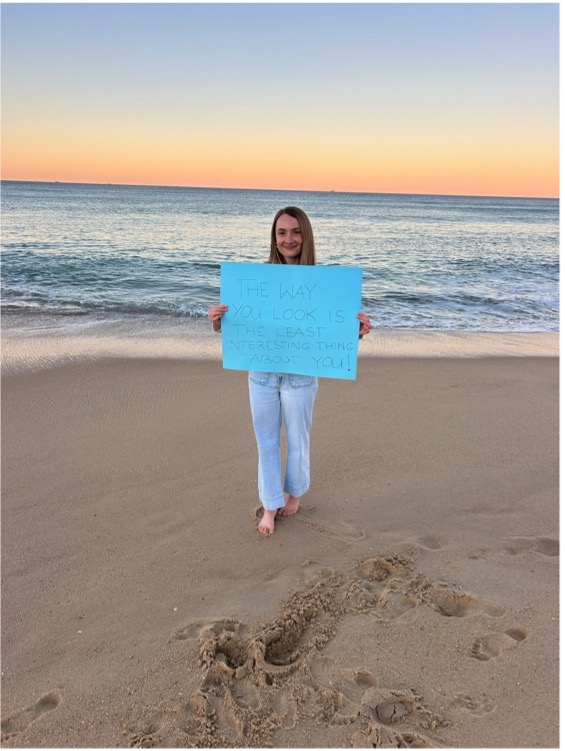
Compliment them on who they are rather than what they look like
Complimenting and commenting on a person’s body can draw unwanted attention to the receiver. It can make them uncomfortable, upset, disappointed or propel them to continue engaging in potentially unhealthy behaviours in pursuit of further praise and compliments. It is for these reasons that we should instead move our compliments and kind words to a person’s characteristics. Did they do something kind? Are they wearing something you love? Did their smile just light up a room? Do you find them absolutely hilarious? Did they articulate something really clearly for you? I love this line in Lindsay & Lexie Kite’s book ‘More than a body’: “my purpose is to bring light into this world, not to decorate it.” Remember, our bodies are the least interesting thing about us.
Seek support for your own relationship with food and your body
If you are struggling with your relationship with food and your body, it is nothing to be ashamed of and there is support available to you. You don’t need to wait until you’re “sick enough” to ask for help. Depending on where you’re at you might like to speak to someone, ask for professional help, read books, watch documentaries, following inspiring accounts online or do a mini course. Here are some recommendations:
To Read:
Embrace Kids – Taryn Brumfitt and Dr Zali Yager
More than a body – Lexie and Lindsay Kite
Your weight is not the problem – Lyndi Cohen
The gifts of imperfection – Brene Brown
To Watch:
Embrace – Taryn Brumfitt
Embrace Kids – Taryn Brumfitt
To Follow:
@thisisyourbody_nutrition
@miind_au
@bodyimagemovement
@nude_nutritionist
@theembracehub
@turiapitt
@bodyimage_therapist
@themindfuldietician
@alexlight_ldn
@meganjaynecrabbe
To Speak To:
A registered professional that specialises in body image and disordered eating.
We hope this post has been helpful and you’re feeling inspired to take the next step in supporting your teen to appreciate the amazing body they’re in!
Reviewed by Carmen Nielsen (BPsychSc(Hons), MProfPsych) and Ross Carlyon (BA, DipEd, Med Studies, DipSchoolAdmin).
You can explore the Body Appreciation Workbook right here. We hope it offers your teen a supportive space to connect with their body in a kinder, more respectful way.