As a parent, caregiver, or mentor, you play a crucial role in supporting your young person’s mental well-being, especially when it comes to managing stress. Below are a couple of simple things you can do to support them.
1. Encourage healthy habits
Prioritise Sleep
Getting enough sleep is not only vital for our physical health but also has a significant impact on our mental well-being. Research suggests that young people require 8 to 10 hours of quality sleep each night. It has also been shown that sufficient sleep improves mood regulation which makes it easier for young people to regulate their stress levels.
Fuel their Brains
Our brain and gut have a close relationship. Research suggests that a healthy gut microbiome, which is influenced by the food we consume, can positively impact our mental health. This means that providing our brains with the right nutrients can increase our ability to cope with stress.
When we experience stress, our bodies enter a heightened state of arousal to keep us safe, which consumes a lot of energy. This is why fatigue and low energy levels are common symptoms of stress. By consuming nourishing foods, we gain a steady source of energy that enables us to cope with stress more effectively.
Promote Physical Activity
Did you know that physical activity is a natural stress reliever? When we exercise, our brains release endorphins, dopamine, and serotonin, commonly known as the “feel-good” chemicals into our bodies. These chemicals positively impact our overall well-being by boosting our mood and reducing feelings of stress. Regular physical activity helps to lower the amount of stress hormones in our bodies such as cortisol and adrenaline which are responsible for the physiological response to stress. Encourage your young person to engage in physical activities they enjoy, such as sports, dancing, hiking, or swimming.
Encourage Self-Care
Self-care is something we can all work on. In this busy and fast-paced world, we often forget to take time for ourselves, and this holds true for our young people as well. Self-care refers to doing the things we enjoy and love, as well as taking time to look after our physical, emotional, and mental well-being. Numerous studies have highlighted the positive impact of self-care practices on stress reduction. Encouraging your young person to incorporate a daily self-care practice into their routine can have profound benefits. We have created a printable self-care calendar that not only offers some ideas for daily self-care practices but also encourages your young person to personalise it with their own ideas. Additionally, we have included an ‘affirmation station’ for them to write down self-affirmations, as a form of self-care. You can download our MiiND Self-Care calendar below.
2. Teach and Model Healthy Coping Strategies
As a parent, caregiver, or mentor you are in a unique position to model and teach young people healthy strategies to cope with stress.
Breathing Exercises
One of the easiest coping strategies to both model and teach is breathing exercises.
Typically, when we experience stress, our breathing rate increases and we tend to take shallow breaths. Breathing exercises can be a great way to slow down our physiological response to stress and signal to our body and brain that we are safe and okay. Below are a few breathing exercises that you can demonstrate to your young person.
Belly Breathing
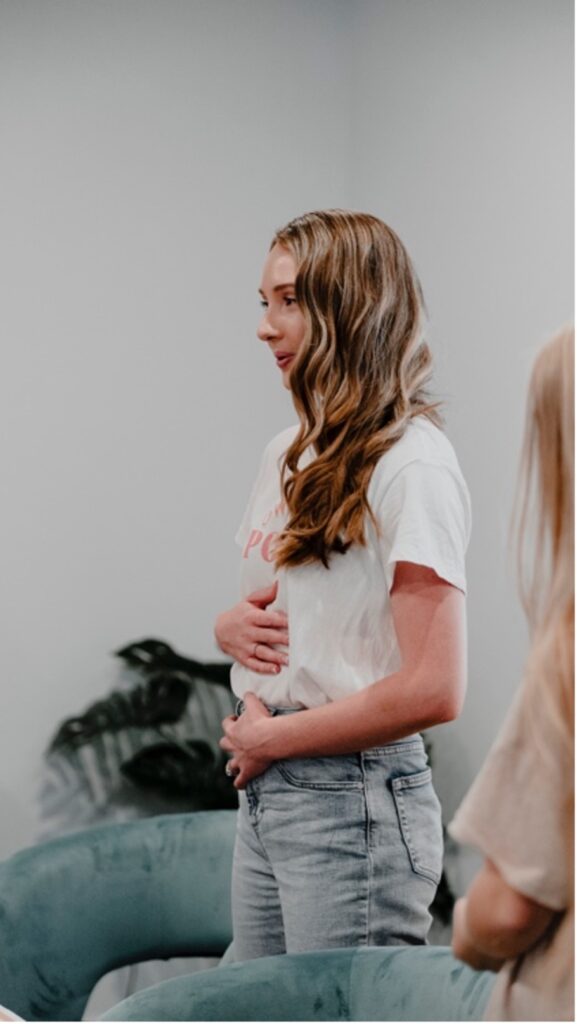
Belly Breathing is a state of breathing that is controlled by a large muscle in our body called the diaphragm. A belly breath is deeply inhaling and allowing the breath to fill your belly instead of just your lungs. By breathing deeply, we slow down our nervous system signalling to our brain to switch off the alarm system. To teach young people belly breathing, you can guide them through the following steps:
- Instruct them to place one hand on their chest and the other hand on their belly.
- Next, encourage them to take a slow, deep breath in through their nose for 3 seconds, allowing their belly to rise while keeping their chest relatively still.
- Ask them to hold that breath for 3 seconds and then instruct them to slowly exhale for 3 seconds through their mouth, allowing their belly to fall.
- Repeat this process for a few minutes.
To make this activity interactive, encourage your young person to imagine that with each inhale, they are gently inflating an imaginary balloon inside their belly. Then, on the exhale, invite them to blow the air into a real balloon. You can even turn it into a friendly competition, seeing who can take the deepest breath and blow the balloon up the largest.
Box Breathing
Box breathing is a technique that involves inhaling, holding the breath, exhaling, and then holding the breath again for equal counts. For example, you can instruct your young person to breathe in for a count of five, hold for a count of five, exhale for a count of five, and then hold again for a count of five. This is a rhythmic breathing pattern that slows down the nervous system.
Bunny Breaths
This activity might be more effective for younger children but remains highly effective. It is one of my personal favourites. Bunny breathing is taking three quick short sniffs in through your nose, like a bunny sniffing a flower. Then one big exhale through your mouth. Bunny breaths are particularly effective in helping young people reduce stress during moments of high anxiety or distress.

3. Encourage Participation in Mindfulness Activities
Have you ever noticed your mind wandering while doing something as simple as brushing your teeth? It’s like your body is on autopilot while your mind is either thinking about the past or the future. Mindfulness is the opposite to this. It is about being fully present in the here and now. Often, ruminating on past mistakes or worrying about future events can lead to stress. Mindfulness is like giving your mind a break from all those stress-inducing thoughts. It helps us to stop those negative thoughts from taking over and allows us to focus on what’s happening right now, in this very moment. There are a lot of different ways of practicing mindfulness. Below are just a few.
Mindfulness Breathing
Breathing exercises have long been recognised as an effective strategy for reducing stress. However, did you know that we can enhance the effectiveness of this technique by combining it with mindfulness? Mindfulness breathing is quite simple. It involves engaging in one of the above-mentioned breathing exercises, while also encouraging your young person to pay close attention to their breath. This means noticing the air as it enters their lungs or fills their belly and being aware of the sensations of exhaling that air out. It’s all about directing their focus to the act of breathing itself.
It is very common for thoughts to naturally arise in our minds while doing mindfulness activities. The key is to recognise when these thoughts arise and to gently guide our attention back to our breath. To help you support your young person in practicing mindfulness breathing, we have created a mindfulness breathing script that you can download below.
Progressive muscle relaxation
It is no secret that prolonged and high levels of stress may cause our muscles to tense up. Therefore, frequent, and unexplained headaches and body aches are common symptoms of stress. Progressive muscle relaxation is an exercise that involves intentionally tensing and then relaxing each muscle group in our body. By doing this exercise, we can release the built-up tension and promote a sense of relaxation. It is also considered a mindfulness activity. When we practice progressive muscle relaxation, we focus our full attention on the sensations in our bodies. To help support your young person in practicing progressive muscle relaxation, we have created a script that you can download below.
Mindfulness colouring
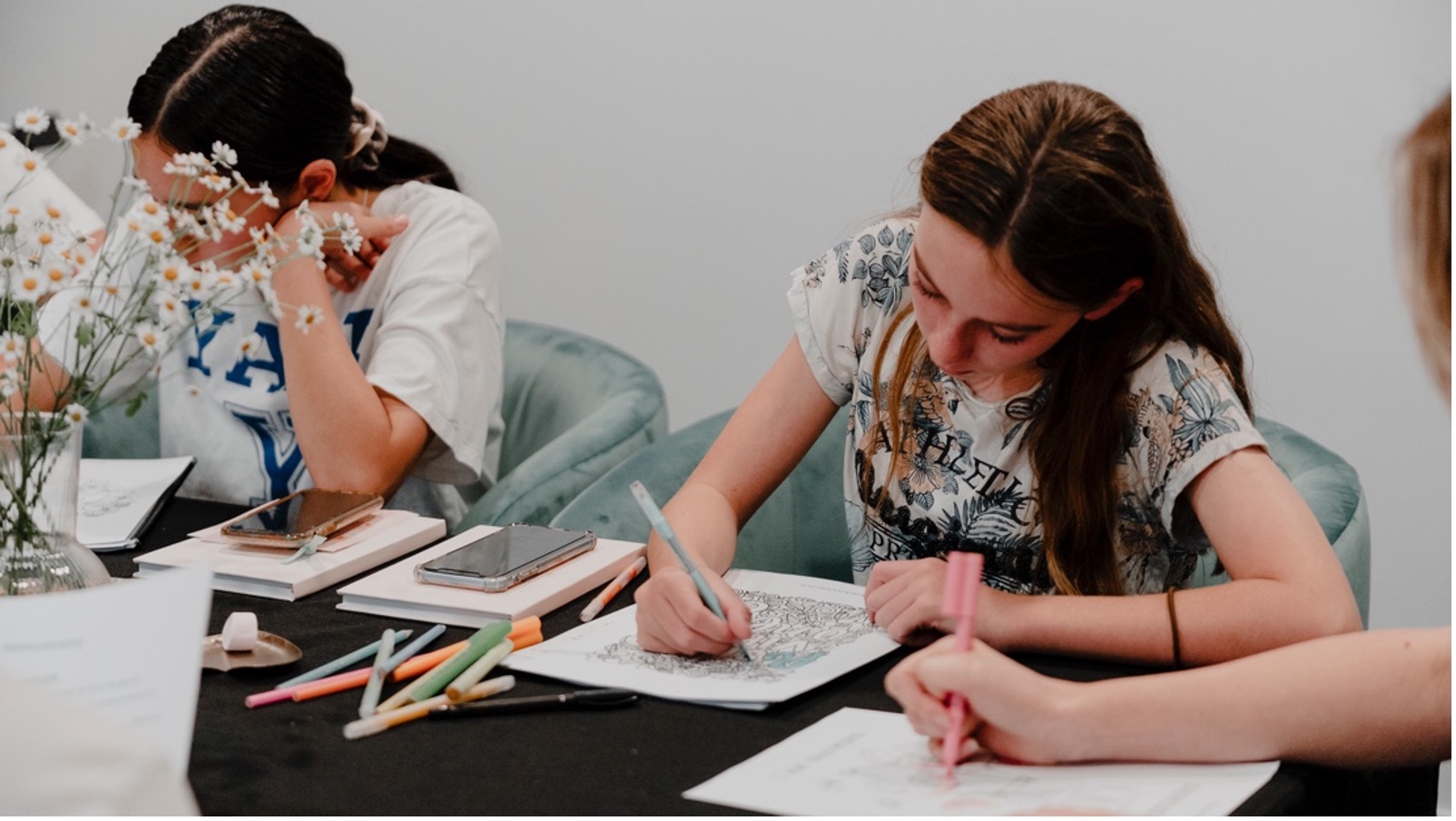
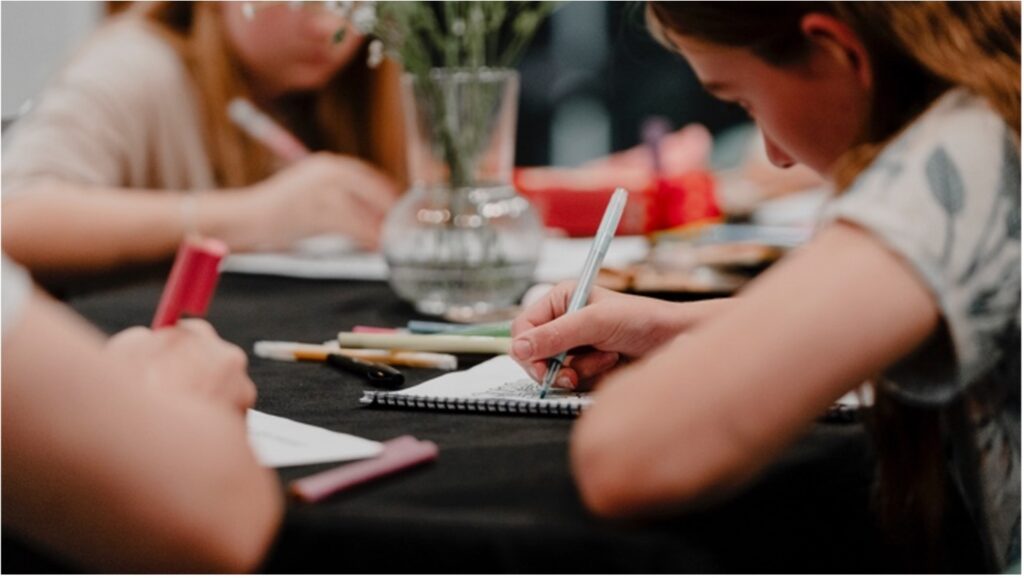
Mindfulness colouring is a fun and creative way to teach your young person to pay attention to the present moment. Mindfulness colouring is about directing our attention to the act of colouring itself. It encourages young people to become fully present by focusing their attention to the weight of the pencil in their hands, the shades of the colours and the sensations of colouring. Recent research has also shown that mindfulness colouring not only reduces stress and anxiety, but also improves mindful attention and overall well-being.
All you need is a colouring page and a set of colouring materials. You can download this helpful script below that will assist you in guiding them through this activity.
For more techniques check out the MiiND Guide to Coping with Stress.
Reviewed by Laura Scherman (BPsychSc(Hons), MPsych(Clin), MAPS), Dinusha Cragg (BSocSc(Psych)(Hons), MPsych(Clin), MAPS) and Ross Carlyon (BA, DipEd, MEd Studies, DipSchoolAdmin).
References
- Australian Psychological Society (APS). (2015). Stress and Wellbeing: How Australians are coping with life. APS. https://psychology.org.au/getmedia/ae32e645-a4f0-4f7c-b3ce-dfd83237c281/stress-wellbeing-survey.pdf.
- Anniko, M. M., Boersma, K., & Tillfors, M. (2019). Sources of Stress and worry in the development of stress-related mental health problems: A longitudinal investigation from early- to mid-adolescence. Anxiety, Stress and Coping, 32(2), 155-167. https://doi.org/10.1080/10615806.2018.1549657.
- Aldwin, C. (2012). Stress and coping across the lifespan. In S. Folkman (Ed.), The Oxford Handbook of Stress, Health, and Coping (pp. 15-34). Oxford University Press.
- Bentley, T. G. K., Seeber, C., Hightower, E., Mackenzie, B., Wilson, R., Velazquez, A., Cheng, A., Arce, N. N., & Lorenz, K. A. (2022). Slow-Breathing Curriculum for Stress Reduction in High School Students: Lessons Learned From a Feasibility Pilot. Frontiers in Rehabilitation Sciences, 3, 864079. https://doi.org/10.3389%2Ffresc.2022.864079.
- Butler, L. D., Mercer, K. A., McClain-Meeder, K., Horne, D. M., & Dudley, M. (2019). Six domains of self-care: Attending to the whole person. Journal of Human Behaviour in the Social Environment, 29(1), 107-124. https://doi-org.ezproxy.usc.edu.au/10.1080/10911359.2018.1482483.
- Bluth, K., & Blanton, P. W. (2014). Mindfulness and self-compassion: Exploring pathways to adolescent emotional well-being. Journal of Child and Family Studies, 23, 1298-1309. Doi:I 10.1007/s10826-013-9830-2.
- Carsley, D., & Heath, N. (2018). Effectiveness of mindfulness-based coloring for test anxiety in adolescents. School Psychology International, 39(3), 251–272. doi:10.1177/0143034318773523.
- Ciarrochi, J., Kashdan, T. B., Leeson, P., Heaven, P., & Jordan, C. (2010). On being aware and accepting: A one-year longitudinal study into adolescent well-being. Journal of Adolescence,34(4), 695–703. doi:10.1016/j.adolescence.2010.09.003.
- De Anda, D. et al. (2000). Stress, stressors and coping among high school students. Children and Youth Services Review, 22(6), 441-463.
- Gonzalez, M. J. (2014). Diet and stress. Psychiatric Clinics of North America, 37(4), 579-589. https://doi.org/10.1016/j.psc.2014.08.004.
- Holt, N., J. (2019). Cognitive and affective benefits of colouring: Two randomised controlled crossover studies. Journal of the American Art Therapy Association, 36(4), 200-208. https://doi.org/10.1080/07421656.2019.1645498.
- Junker, S., Pömmer, M., & Traut-Mattausch, E. (2021). The impact of cognitive-behavioural stress management coaching on changes in cognitive appraisal and the stress response: a field experiment. Coaching: An International Journal of Theory, Research and Practice, 14(2), 184-201. https://doi.org/10.1080/17521882.2020.1831563.
- Kennerley, H., Kirk, J., & Westbrook, D. (2017). An introduction to cognitive behaviour therapy: Skills and Applications (3rd ed.). SAGE Publications Ltd.
- Kramer, A. C., Neubauer, A. B., & Schmiedek, F. (2022). The effectiveness of a slow-paced diaphragmatic breathing exercise in children’s daily life: A Micro-Randomized Trial. Journal of Clinical Child and Adolescent Psychology, 30(1), 1-14. https://doi-org.ezproxy.usc.edu.au/10.1080/15374416.2022.2084743.
- Lin, H. J., & Yusoff, M. S. B. (2013). Psychological distress, sources of stress and coping strategy in high school students. International Medical Journal, 20(6), 1-6.
- McCallie, M. S., Blum, C. M., & Hood, C. J. (2006). Progressive muscle relaxation. Journal of Human Behavior in the Social Environment, 13(3), 51-66.
- Nagabharana, T. K., Joseph, S., Rizwana, A., Krishna, M., Barker, M., Fall, C., Kumaran, K., & Krishnaveni, G. V. (2021). What stresses adolescents? A qualitative study on perceptions of stress, stressors and coping mechanisms among urban adolescents in India. Welcome Open Res, 11(6), 1-19.
- Noushad, S., Ahmed, S., Ansari, B., Mustafa, U. H., Saleem, Y., & Hazrat, H. (2021). Physiological biomarkers of chronic stress: A systematic review. International Journal of Health Sciences, 15(5), 46-59.
- Querstret, D., Morison, L., Dickinson, S., Cropley, M., & John, M. (2020). Mindfulness-based stress reduction and mindfulness-based cognitive therapy for psychological health and well-being in nonclinical samples: A systematic review and meta-analysis. International Journal of Stress Management, 27(4), 394. https://doi.org/10.1037/str0000165,
- Qiu, J., & Morales-Muñoz, I. (2022). Associations between sleep and mental health in adolescents: Results from the UK millennium cohort study. International Journal of Environmental Research and Public Health, 19(3), 1-14. https://doi.org/10.3390%2Fijerph19031868.
- Romeo, R. D. (2014). The teenage brain: The stress response and the adolescent brain. Current Directions in Psychological Science, 22(2), 140-145. https://doi.org/10.1177%2F0963721413475445.
- Schussler, D. L., Oh, Y., Mahfouz, J., Levitan, J., Frank, J. L., Broderick, P. C., Mitra, J. L., Kohler, K., & Greenberg, M. T. (2020). Stress and Well-Being: A Systematic Case Study of Adolescents’ Experiences in a Mindfulness-Based Program. Journal of Child and Family Studies, 30, 431-446. https://doi-org.ezproxy.usc.edu.au/10.1007/s10826-020-01864-5.
- Straub, R. O. (2017). Health Psychology: A Biopsychosocal Approach (5th ed.). Worth Publishers.
- Toussaint, L., Nguyen, Q. A., Roettger, C., Dixon, K., Offenbächer, M., Kohls, N., Hirsch, J., & Sirois, F. (2021). Effectiveness of progressive muscle relaxation, deep breathing, and guided imagery in promoting psychological and physiological states of relaxation. Evidence-Based Complementary and Alternative Medicine, 2021, 5924040. https://doi.org/10.1155/2021/5924040.
- Town, R., Hayes, D., March, A., Fonagy, P., & Stapley, E. (2023). Self-management, self-care, and self-help in adolescents with emotional problems: a scoping review. European Child and Adolescent Psychiatry, 15, 1-28. https://doi.org/10.1007%2Fs00787-022-02134-z.
- Zisopoulou, T., & Varvogli, L. (2023). Stress management methods in children and adolescents: Past, present, and future. Hormone Research in Paediatrics, 96(1), 97-107. https://doi.org/10.1159/000526946.